
The Agricultural Revolution in Al-Andalus

Updated: Apr 24
The Living Heritage – From Al-Andalus to the Modern Global Market
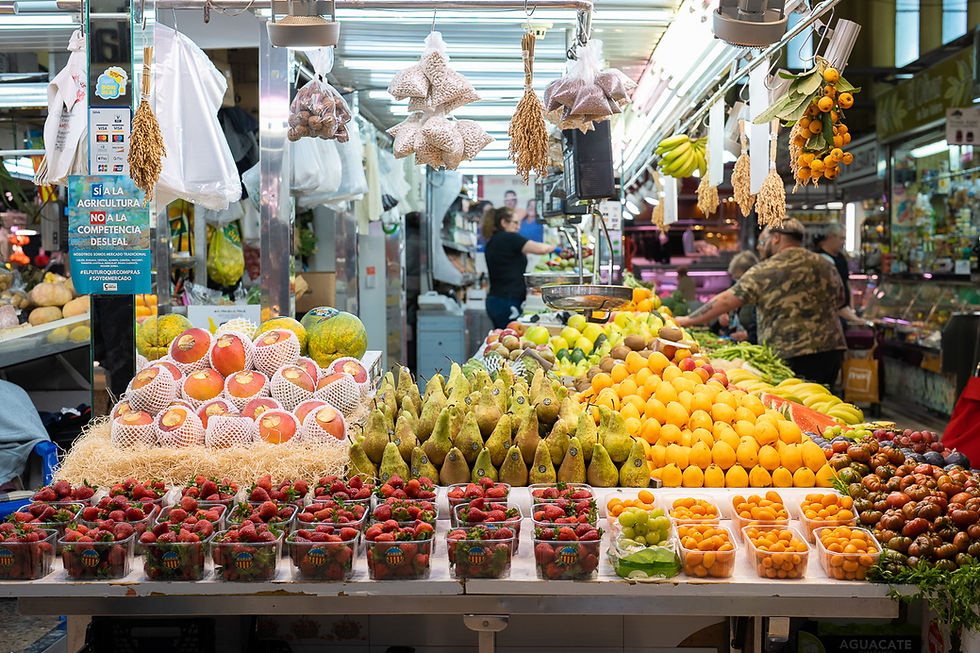
The Andalusi Agricultural Revolution did not end with the fall of Granada in 1492. On the contrary, its technical structures, its lexicon, and its species were so deeply integrated into the peninsular identity that they now constitute the very foundation of the Spanish agro-food sector, one of the most competitive in the world.
1. The Genetic Landscape and the Global Diet
Many of the products that Spain exports massively today were "designed" and acclimatized in the Almunias (Chapter V).
The Orchard of Europe: The model of intensive citrus production in Valencia or vegetable production in Almería is the direct heir to Andalusi diversification (Chapter I).
Identity Gastronomy: Global dishes like paella or gazpacho are impossible to conceive without the rice, citrus, and capillary irrigation techniques perfected ten centuries ago.
2. The Survival of Institutions: The Water Court
The system of distributive water justice lives on. The Water Court of the Plain of Valencia (Tribunal de las Aguas de la Vega de Valencia), which still meets every Thursday, is the purest example of how Andalusi social water management surpassed the passage of centuries due to its technical efficiency and equity.
Living Lexicon: Words like acequia, alberca, aljibe, or noria are not archaisms, but technical terms still in use that demonstrate that the "linguistic software" of our agriculture remains Arab.
3. From Al-Andalus to the New World
The Andalusi Agricultural Revolution was the "dress rehearsal" for American agriculture. The irrigation techniques and species acclimatized in Spain (such as sugarcane or citrus fruits) were the ones that Spaniards took to America, transforming the landscape of the new continent based on the model of Al-Andalus.
Technical Summary: The Permanent Legacy
Inherited Element | Andalusi Origin | Current Status |
Irrigation Systems | Acequias and Qanats | Base of modern irrigation communities. |
Key Species | Rice, Citrus, Cotton | Pillars of the Spanish agro-food export market. |
Institutions | Water Courts | UNESCO-recognized models of sustainable water management. |
Technical Lexicon | Agricultural Arabisms | Essential technical nomenclature in the primary sector. |


Comments